
 By BullScreen Editorial Team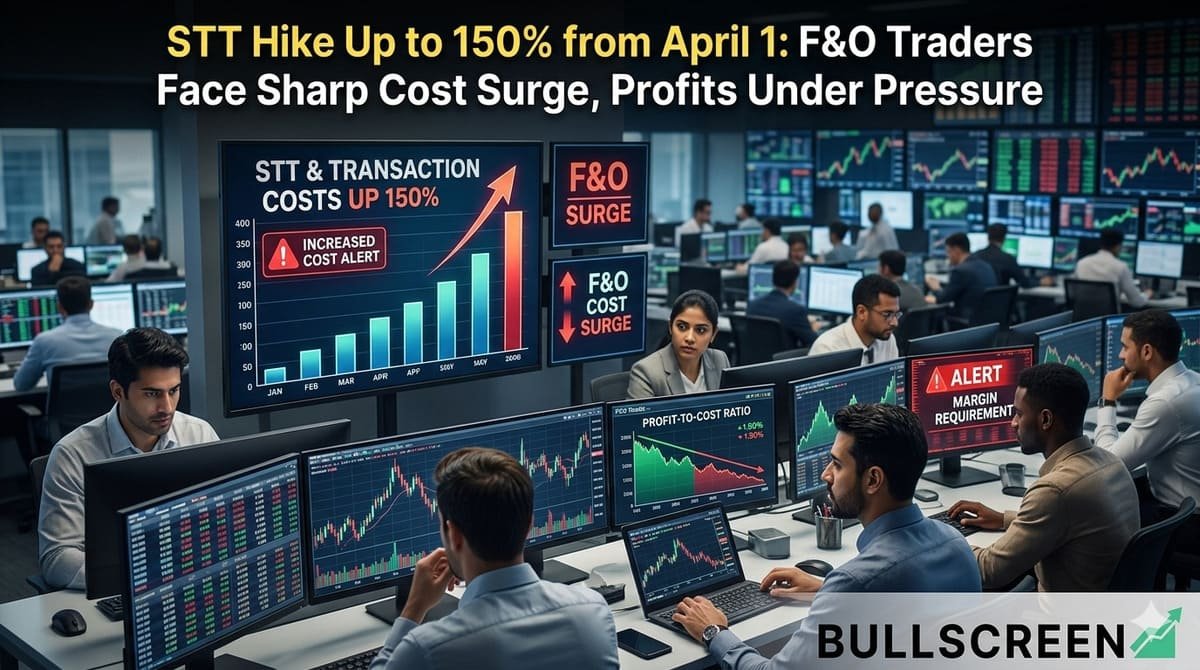
India’s derivatives market enters a new phase from April 1 as a steep increase in Securities Transaction Tax (STT) on F&O trading comes into force, raising costs for traders and potentially reshaping market activity.
Announced in the Union Budget by Finance Minister Nirmala Sitharaman, the move aims to curb excessive speculation in the derivatives segment. The STT on futures has been raised to 0.05% from 0.02%, marking a 150% increase, while options STT on premium rises to 0.15% from 0.1%.
The impact on traders is immediate. For futures contracts, breakeven levels have nearly doubled. For example, a Nifty futures trade that earlier required about six points to break even will now need around 13 points. Similarly, Bank Nifty futures breakeven rises to 26 points from 10.4, while Sensex futures move to 37.5 points from 15 earlier.
This sharp rise in transaction costs is expected to discourage high-frequency and small-margin trades. Market participants say strategies relying on quick, small gains may lose effectiveness under the new regime.
However, the effect on options trading is relatively moderate. While costs have increased, the breakeven does not rise as sharply as in futures, though small price moves may no longer be as profitable.
Brokerages warn of a potential drop in trading activity. Industry estimates suggest volumes could decline by 20–30% as higher costs weigh on participation. Analysts also flag a possible short-term impact on FPI flows, particularly from global funds focused on derivatives.
Overall, the STT hike is likely to reduce speculative trades, increase trading discipline, and shift focus toward higher-quality positions in India’s derivatives market.