
 By BullScreen Editorial Team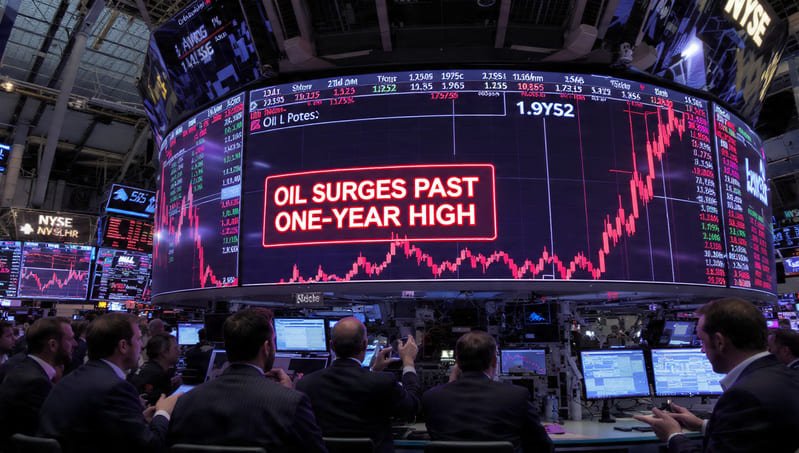
Global oil prices jumped sharply on Monday, March 2, 2026, as rising tensions in West Asia triggered fresh fears of supply disruption. Investors reacted strongly to concerns that the critical Strait of Hormuz could face closure amid escalating conflict involving Iran, Israel, and the United States.
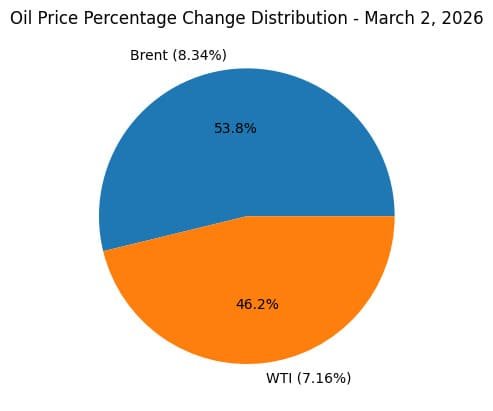
When trading resumed, crude oil futures surged more than 8%. As of 12:20 p.m., Brent Crude (May futures) was trading 8.34% higher at $78.95 per barrel — its highest level in over a year. During intraday trade, prices briefly spiked nearly 12%, touching $81.5 per barrel before easing slightly.
Meanwhile, West Texas Intermediate (WTI) crude was up 7.16% at $71.82 per barrel, reflecting similar concerns in the U.S. market.
The main reason behind the sudden rally is fear of supply disruption. Tehran has reportedly called for the closure of the Strait of Hormuz following the death of Iran’s supreme leader, Ayatollah Ali Khamenei.
The Strait of Hormuz is one of the world’s most important oil transit routes. Nearly one-fifth of global crude oil passes through this narrow waterway. Any disruption can significantly reduce global supply, pushing prices higher.
According to S&P Global Commodities at Sea (CAS), shipping activity in the Strait had already fallen by 40–50% as of February 28, signaling growing caution among traders and transporters.
The geopolitical tension intensified after the U.S. claimed it had destroyed the headquarters of Iran’s Revolutionary Guards and struck over 1,000 targets. Such developments have increased fears that the conflict could spread further, potentially affecting oil production and exports across the region.
Interestingly, just a day earlier, eight members of the OPEC+ — including Saudi Arabia, Russia, Iraq, UAE, Kuwait, Kazakhstan, Algeria, and Oman — agreed to increase oil production by 206,000 barrels per day starting soon.
This move was aimed at keeping markets well supplied. However, traders believe that any large-scale disruption in the Strait of Hormuz could outweigh the additional supply.
Fatih Birol, Executive Director of the Paris-based International Energy Agency, said the agency is “actively monitoring events in the Middle East and the potential implications for global oil and gas markets.” He added that markets have been well supplied so far.
For new investors, here’s the simple takeaway:
- Oil prices rise when supply is threatened.
- The Strait of Hormuz is crucial for global oil transport.
- Any conflict in major oil-producing regions quickly impacts prices worldwide.
- Higher crude prices can eventually affect petrol, diesel, aviation fuel, and inflation.
Markets are likely to remain volatile as geopolitical developments unfold. Traders and governments alike are closely watching whether tensions ease — or escalate further.