
 By BullScreen Editorial Team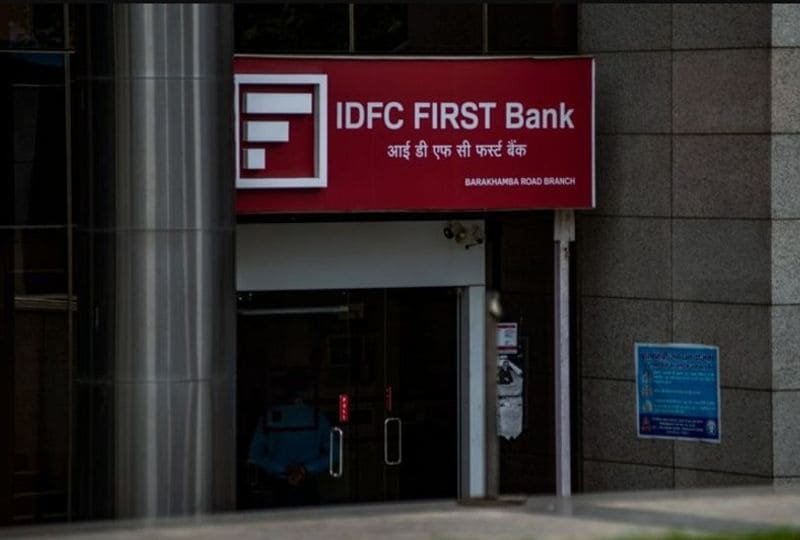
In a development that has raised fresh concerns over financial oversight in government-linked accounts, a suspected fraud of more than ₹116 crore has surfaced in the Municipal Corporation of Chandigarh, days after a similar controversy related to government funds in Haryana. The case revolves around funds belonging to Chandigarh Smart City Ltd (CSCL) and the Municipal Corporation that were maintained in accounts at IDFC First Bank.
Following the discovery of the alleged irregularities, the city police registered a First Information Report (FIR) against Anubhav Mishra, a missing Municipal Corporation employee who worked as an outsourced accountant, and Ribhav Rishi, the former branch manager of the bank’s Sector 32 branch, along with other bank officials. The case was filed based on a complaint submitted by the accounts officer of the corporation, who sought action over suspected financial manipulation in several bank accounts linked to CSCL and the Municipal Corporation.
The matter came under scrutiny after reports in leading newspapers highlighted financial irregularities involving funds of the Haryana government that were deposited with IDFC First Bank and AU Small Finance Bank. Taking note of those developments, the Municipal Corporation initiated a review of its own financial arrangements and approached the bank to withdraw or transfer the funds related to the smart city project.
The CSCL project in Chandigarh had officially been closed in March 2025. Following its closure, all assets, records and financial matters associated with the project were transferred to the Municipal Corporation for further management and settlement. During its operations, CSCL had maintained multiple accounts with the Sector 32 branch of IDFC First Bank.
As part of the transition process after the closure of the smart city initiative, a dedicated bank account was opened to consolidate the remaining CSCL funds. According to the records that were handed over to the Municipal Corporation, all funds lying in various accounts of the company were supposed to be transferred to this account so that pending expenses related to the project could be settled smoothly.
However, complications began to surface when the corporation approached the bank seeking encashment of fixed deposit receipts (FDRs) linked to the funds. These FDRs had reportedly been handled by Anubhav Mishra, who was responsible for maintaining custody of the deposit receipts, bank statements and other financial records of the CSCL accounts.
The Municipal Corporation requested the bank to encash the FDRs and transfer the entire balance amount, along with accrued interest, to its account with Punjab National Bank. The move was part of the process of consolidating and securing the funds following concerns raised by the Haryana case.
In response, officials at the bank verbally informed the Municipal Corporation that the fixed deposits mentioned in the documents were not visible in the bank’s internal system. According to the bank, the FDRs appeared to be fake. These deposit receipts were reportedly issued by Ribhav Rishi during his tenure as branch manager in March and April 2025.
The revelation prompted a deeper review of the financial records. During preliminary scrutiny and cross-verification of bank statements last month, several inconsistencies were detected. Officials found that the statements provided during the transfer of charge in March and April 2025 did not match the original statements later obtained directly from the bank.
Multiple debit and credit entries in the earlier documents appeared suspicious and were suspected to be manipulated. Investigators believe that some of the entries could have been fabricated to create a misleading financial picture.
More significantly, fixed deposits worth around ₹116.84 crore that had been shown as active assets in the records handed over to the Municipal Corporation were missing from the official bank statements obtained on February 24, 2026. The absence of these deposits raised serious concerns about possible misappropriation or falsification of records.
A day later, on February 25, the regional head and cluster head of IDFC First Bank met senior officials of the Municipal Corporation and informed them that the bank statement dated April 22, 2025, along with the FDRs submitted earlier, appeared to be fake.
The situation has drawn attention to the transition process that took place when the smart city project was formally handed over to the Municipal Corporation in March 2025. At that time, a committee had been formed to take charge of all files, financial documents and operational records related to the project.
Anubhav Mishra, who was serving as an outsourced accountant, was part of this committee and played an active role in handling the financial files during the transfer. According to officials, Mishra has not attended the office since he handled the documents related to the withdrawal and management of the fixed deposits.
His absence since the discovery of the irregularities has further intensified suspicion. In its complaint, the Municipal Corporation stated that there was a strong possibility that Mishra may have been involved in the matter in connivance with bank officials.
Authorities have also indicated that the role of other officials associated with CSCL cannot be ruled out at this stage. Investigators are now examining documents, bank records and communication logs to determine how the alleged fraud was carried out and whether internal controls failed during the transition of funds.
The case has triggered fresh debate over financial safeguards in government-backed urban development projects and the need for stronger monitoring of public funds held in banking institutions. As the investigation progresses, law enforcement agencies are expected to examine the involvement of both bank personnel and officials linked to the smart city project to trace the missing funds and establish accountability.